Example analysis
Shoulder abduction range of motion: example
Under three seconds of video, filmed front-on on a phone: both arms raised out to the side and lowered again. Here is what the range-of-motion report measured, and how to read it.
The clip
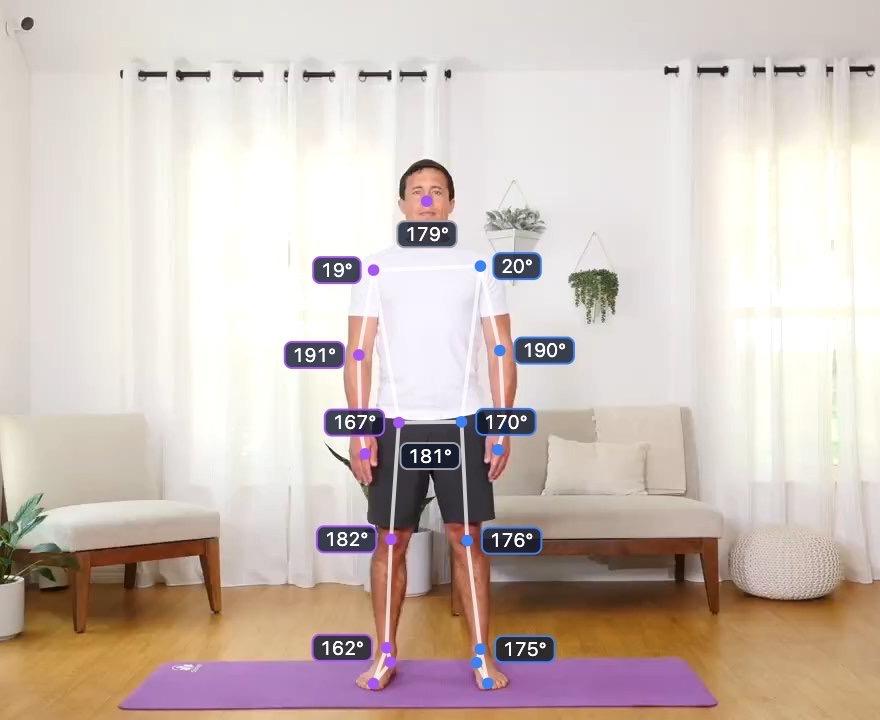
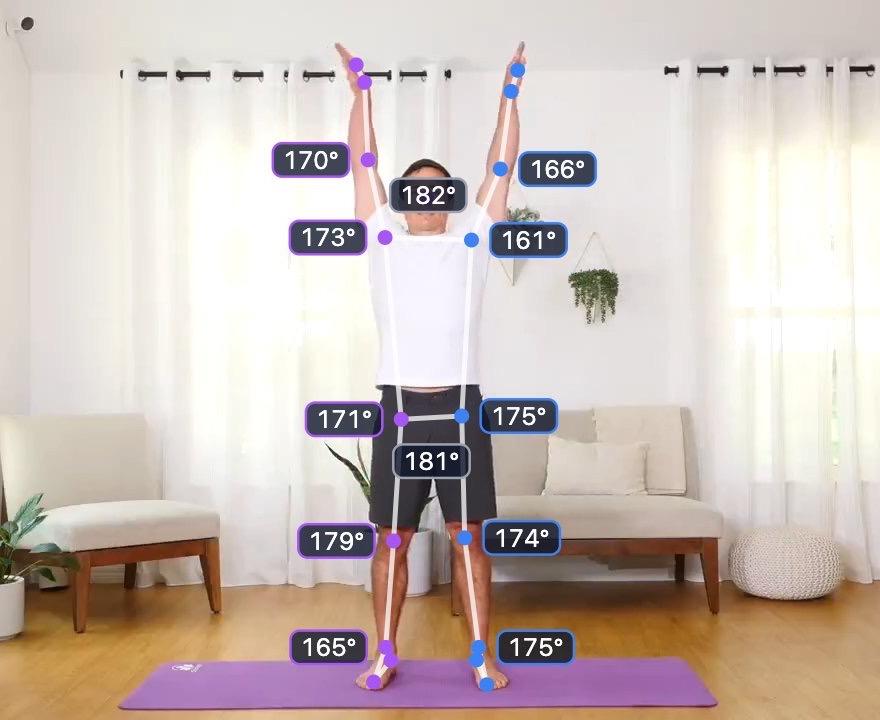
| Figure | What it is |
|---|---|
| 142.6° | Left shoulder range, 19.8° to 162.4° |
| 154.5° | Right shoulder range, 19.2° to 173.7° |
| 0.8° | Low back range: the trunk held still |
| 80 | Frames, every one measured |
Filmed front-on, so the report flips the right side back onto the same scale as the left; the downloads keep the engine's own clockwise angles.
The shoulders
| Joint | Lowest | Highest | Range |
|---|---|---|---|
| Left shoulder | 19.8° | 162.4° | 142.6° |
| Right shoulder | 19.2° | 173.7° | 154.5° |
Both arms started from almost the same place, about 19–20° from the trunk. The right arm went 11.3° higher at the top. Filmed front-on, the two sides are mirror images in the picture, so the report flips the right side back onto the same scale as the left; the downloads keep the engine's own clockwise angles.
Checking for compensation
An arm can be made to look higher by leaning the trunk away from it. The report measures the trunk too, so that can be ruled in or out rather than guessed at.
| Joint | Lowest | Highest | Range |
|---|---|---|---|
| Low back (trunk lean) | 180.4° | 181.2° | 0.8° |
| Neck | 178.1° | 182.4° | 4.3° |
| Left hip | 169.8° | 176.1° | 6.3° |
| Right hip | 166.5° | 172.1° | 5.6° |
| Left elbow | 163.6° | 193.2° | 29.6° |
| Right elbow | 166.4° | 191.8° | 25.4° |
The trunk moved less than a degree in all 80 frames, so the range at the shoulders is the arms' own. The elbows stayed within 17° of straight through the lift. The low back and neck figures are calculated from the landmarks rather than measured by the engine, and the report marks them so.
Against reference values
This clip measures abduction — raising the arm out to the side. The large CDC reference study measured shoulder flexion, raising it forwards, not abduction, so there is no published average from it to set these numbers against. Shoulder range of motion explains the reading and how to film flexion side-on.
Open the full report
The shared report is the real thing, view-only: play the video with the skeleton over it, scrub the charts, and read every joint on every frame. Nothing to sign up for.